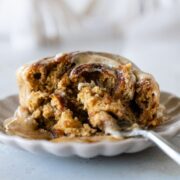
Caramel Gingerbread Cinnamon Rolls
These Caramel Gingerbread Cinnamon Rolls are made with a soft gingerbread dough, warm spices, brown butter frosting, and a layer of gooey caramel
Servings 12 Rolls
Ingredients
For the Dough
- 1 ⅔ cups lukewarm milk
- 1 ½ teaspoons instant yeast
- 2 teaspoon granulated sugar
- ¼ cup granulated sugar
- ¼ cup molasses
- 3 large eggs room temperature
- 1 teaspoon vanilla extract
- 5 ¾ cups 720 bread flour
- 2 ½ teaspoons ground ginger
- 1 ½ teaspoons ground cinnamon
- ¼ teaspoon ground nutmeg
- ¼ teaspoon ground cloves
- ¼ teaspoon allspice optional
- ½ cup unsalted butter softened
- 2 ¼ teaspoons salt
- ½ cup heavy whipping cream
For The Salted Caramel Sauce
- 1 cup granulated sugar
- ¼ cup water
- 3 tablespoons light corn syrup
- 1 cup heavy cream
- 2 teaspoons pure vanilla extract
- 1 teaspoon kosher salt
For the filling
- 1 cup packed brown sugar
- 2 tablespoons ground cinnamon
- ¾ cup unsalted butter room temp
- 3 tablespoons molasses
- 2 teaspoons ground ginger
- ½ teaspoon ground nutmeg
Frosting
- 4 oz cream cheese softened
- ½ cup unsalted butter softened
- 3 cups powdered sugar
- 1 teaspoon vanilla extract
- 1 teaspoon ground cinnamon
- 1-2 tablespoon milk or heavy cream
- Pinch of salt
Instructions
For the dough
- Pour the lukewarm milk into the bowl of your stand mixer and sprinkle the yeast over the top. Add the sugar and let it sit for about 10 minutes, or until the mixture looks lightly foamy and smells yeasty.1 ⅔ cups lukewarm milk, 1 ½ teaspoons instant yeast, 2 teaspoon granulated sugar
- Add the molasses, the rest of the sugar, eggs, vanilla, flour, ginger, cinnamon, nutmeg, cloves, salt, and allspice right on top of the milk mixture. Attach the dough hook and mix on low speed until the flour is fully incorporated and no dry patches remain. The dough will look sticky, rough, and uneven—totally normal.¼ cup granulated sugar, ¼ cup molasses, 3 large eggs, 1 teaspoon vanilla extract, 5 ¾ cups 720 bread flour, 2 ½ teaspoons ground ginger, 1 ½ teaspoons ground cinnamon, ¼ teaspoon ground nutmeg, ¼ teaspoon ground cloves, ¼ teaspoon allspice, 2 ¼ teaspoons salt
- Increase the mixer speed to medium and begin adding the softened butter a tablespoon at a time. Let each piece work into the dough before adding the next. The dough will look messy and streaky at first, then slowly turn smooth and elastic. It should feel tacky and soft. Try not to add extra flour here—this stickiness is what keeps the rolls tender.½ cup unsalted butter
- Continue kneading with the dough hook for 6–8 minutes, or until the dough looks smoother and feels stretchy. If you gently tug a small piece, it should stretch without tearing right away.
- Lightly grease a large bowl and transfer the dough into it. Cover the top and let it rise at room temperature for about one hour. It won’t fully double but should look puffed and a little lighter.
- After the hour rise, place the dough into the fridge for at least two hours and up to six to eight hours. The chill firms the dough, deepens the flavor, and makes rolling and shaping so much easier.
- If you need a long overnight chill, skip the room-temperature rise and place the dough straight into the fridge for eight to nine hours. The dough will rise slowly in the cold and be ready to use the next day.
For the salted caramel (make the same time as the dough!)
- In a medium heavy-bottomed saucepan, combine the sugar, water, and corn syrup. Stir gently to moisten the sugar, then stop stirring completely.1 cup granulated sugar, ¼ cup water, 3 tablespoons light corn syrup
- Set over medium heat and cook undisturbed for 5–10 minutes, until the syrup turns a rich amber color. It can happen fast, so keep an eye out on it. Meanwhile, warm the heavy cream in the microwave for 1 minute.1 cup heavy cream
- Once the caramel is amber (like honey or copper), remove from heat. Carefully pour in the warm cream while whisking — it will bubble up quickly and the steam can burn you
- Whisk until smooth, then stir in the vanilla and salt. If needed, return to low heat briefly to smooth everything out.2 teaspoons pure vanilla extract, 1 teaspoon kosher salt
- Let cool slightly, then transfer to a heat-safe jar. The caramel will thicken as it cools. Refrigerate for up to a week and warm before using.
- Once you are ready to add it to the cinnamon rolls, make sure the caramel is thin and pourable. If its not, pop it in the microwave for 20 seconds.
Filling and Shaping Instructions
- In the bowl of a stand mixer fitted with the paddle attachment, or in a mixing bowl with an electric hand mixer, cream together brown sugar, ground cinnamon, molasses, ginger, nutmeg, and unsalted butter on medium speed until smooth and well combined. Set aside.1 cup packed brown sugar, 2 tablespoons ground cinnamon, ¾ cup unsalted butter, 3 tablespoons molasses, 2 teaspoons ground ginger, ½ teaspoon ground nutmeg
- Lightly flour a clean work surface. Roll the chilled dough into a large rectangle, about 12x16 inches in size. Try to keep the edges as even as possible so the rolls bake uniformly.
- Spread the filling mixture evenly over the dough, using an offset spatula or the back of a spoon to get it all the way to the edges.
- Starting with the long edge farthest from you, cut the dough into 12 even strips using a sharp pizza cutter. Each piece should be about 1⅓ inches wide. Take your time to keep the cuts straight so the rolls bake up evenly.
- Working one at a time, roll each strip into a tight spiral, starting from the bottom edge and rolling upward until you reach the top. As you roll, gently tuck in any filling that tries to escape and keep light, even pressure so each roll stays compact and uniform. Once rolled, pinch the end seam lightly so it stays closed.
- Line a 9x13 baking pan with parchment paper, leaving an overhang on the long sides for easy lifting later. Lightly spray the sides of the pan with nonstick cooking spray.
- Arrange the rolls cut-side up in the prepared pan. 3 across and 4 down. They should have a little space between them — they’ll puff and rise into each other during proofing and baking.
- Cover the pan loosely with plastic wrap or a clean kitchen towel and let the rolls rise for 45–60 minutes, or until puffy and nearly doubled in size. (While the rolls are baking start the brown butter for the frosting)
Baking Instructions
- Once the rolls have finished their second rise, preheat the oven to 375°F.
- Warm the heavy whipping cream just until it loses its chill (microwave for about 15–20 seconds). Gently pour the cream evenly over the tops of the risen rolls, letting it soak down into the layers.½ cup heavy whipping cream
- Place the pan in the oven and bake at 375°F for 10 minutes. After 10 minutes, reduce the oven temperature to 350°F and continue baking for 30-35 minutes, until the rolls are deep golden brown on top. These rolls take a long time to bake because they need to absorb the cream.
- If the rolls begin to brown too quickly, loosely tent the pan with foil during the last 10 minutes of baking.
- Remove the pan from the oven and let the rolls cool for at least 20 minutes before frosting.
- While the rolls are cooling make the cream cheese frosting.
For the brown butter frosting
- Place the unsalted butter in a small saucepan and set it over medium heat. Let it fully melt, then continue cooking as it starts to bubble and foam. Watch the color closely — after a minute or two, the milk solids will turn golden brown and the butter will smell warm and nutty. Remove the pan from the heat immediately so it doesn’t burn, then transfer the brown butter to a heatproof bowl. Let it cool completely to room temperature; if it’s warm, it will melt the cream cheese and make the frosting runny.½ cup unsalted butter softened
- In a large mixing bowl, beat the softened cream cheese on medium speed until it’s smooth, creamy, and free of lumps. This step helps the frosting stay silky instead of grainy.4 oz cream cheese softened
- Once the brown butter has cooled, pour it into the bowl with the cream cheese. Mix until the two are fully combined and the mixture looks smooth and slightly fluffy.
- Add the vanilla extract and ground cinnamon. Mix again so the flavorings blend evenly throughout the frosting.1 teaspoon vanilla extract, 1 teaspoon ground cinnamon
- Add the powdered sugar gradually, about ½ cup at a time, mixing on low speed after each addition. This helps prevent clumps and keeps the powdered sugar from puffing everywhere. Continue mixing until the frosting looks thick and completely smooth.3 cups powdered sugar
- Add 1 to 2 tablespoons of milk or heavy cream, starting with the smaller amount and adding more only if needed. This loosens the frosting and gives it that soft, spreadable texture. Mix until the frosting is light, creamy, and easy to pipe or spread.1-2 tablespoon milk or heavy cream, Pinch of salt
- Add a pinch of salt and mix one final time. The salt balances the sweetness and brings out the brown butter and cinnamon flavors.
Assembly
- Once the cinnamon rolls have cooled slightly, spread the cream cheese buttercream evenly over the tops of the rolls. I did dollops with a piping bag for a pretty look, but you can do whatever you like!
- Drizzle the homemade caramel sauce over the frosted rolls using a spoon or piping bag. Serve warm or at room temperature.