
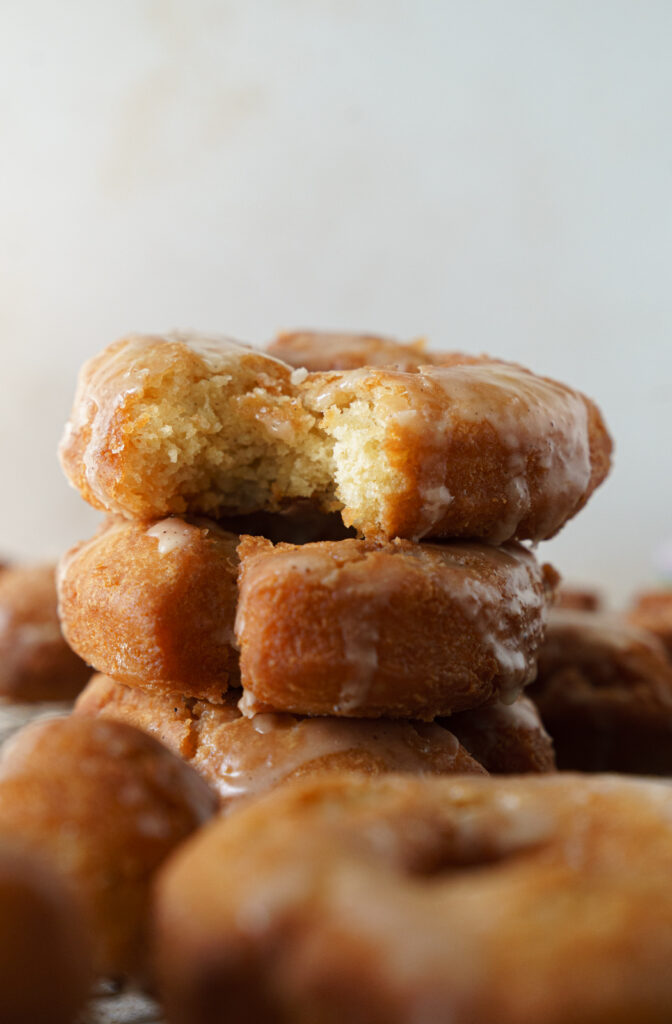
These buttermilk old fashioned donuts are everything a donut should be: crispy and craggy on the outside, tender and cakey in the middle, and finished with a simple vanilla glaze that sets into that glossy, crackly coating you know from the donut shop.
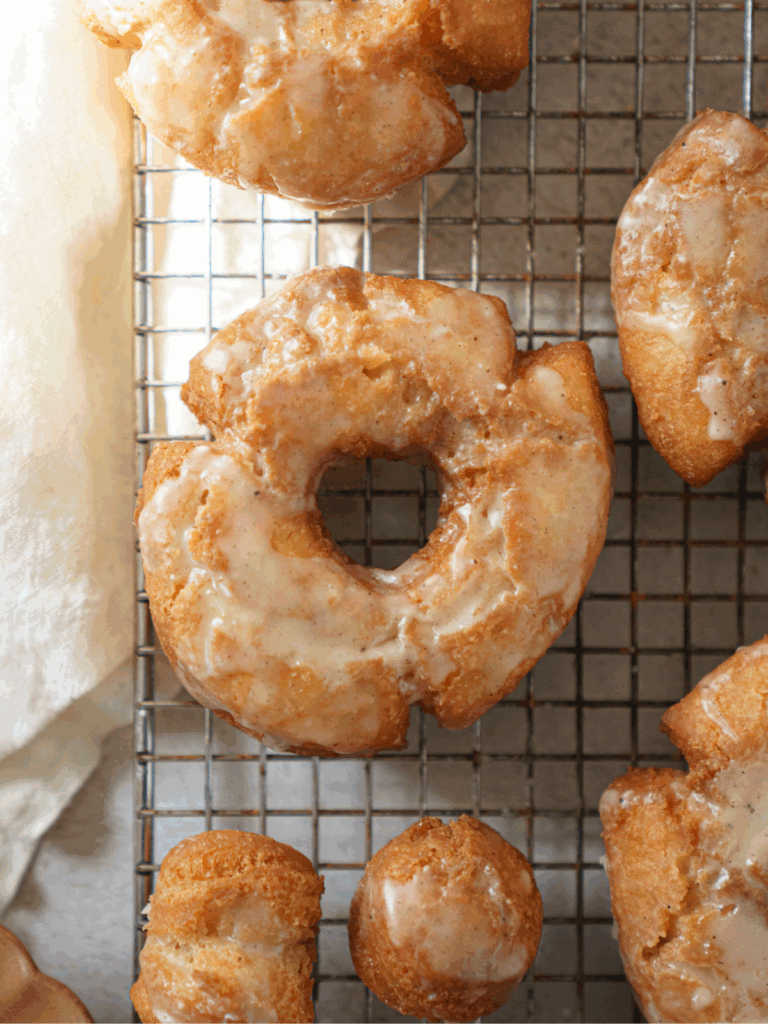
I have a lot of opinions about donuts, and the old fashioned buttermilk donut sits firmly at the top of the list. Not the glazed yeast kind, not a filled one with mystery jam, and certainly not whatever a "gourmet" donut shop charges twelve dollars for. Just a proper buttermilk old fashioned donut with those signature ridges that shatter when you bite into them. That is the donut worth making at home, and this is the recipe I kept tinkering with until I got it right.
If you are already deep in the donut rabbit hole, you might also like my Brioche Donuts, my Maple Old Fashioned Donuts, or my Brown Butter Maple Bars. You are welcome in advance.
Why you'll love this recipe
- The simple ingredients are things you probably already have, with buttermilk and a handful of pantry staples doing most of the heavy lifting on flavor.
- The dough comes together in the bowl of a stand mixer with the paddle attachment, which means minimal effort and no mysterious elbow grease required.
- The two-chill method gives you those deeply craggy, crackly rings that make an old fashioned look like an old fashioned and not just a sad disc of fried dough.
- Frying in vegetable oil is more forgiving than it sounds, especially once you have a thermometer clipped to your pot.
- The vanilla glaze is a sweet glaze that pours beautifully over a warm donut and runs into every crack. It is not complicated. That is the point.
Ingredient overview
You do not need anything obscure for this buttermilk donut recipe. Here is a quick look at what you are working with and why each one matters.
- Butter: Softened butter gives the dough richness and helps create that tender, cakey crumb old fashioned donuts are known for.
- Egg yolks and whole egg: Using egg yolks alongside a whole egg adds fat and flavor without making the dough too wet. Cold large eggs help keep the dough firm and workable.
- Vanilla extract: A full teaspoon of vanilla extract in the dough plus another tablespoon in the glaze. It matters.
- Sour cream: Adds tang and moisture, which plays nicely with the buttermilk for that slight sour flavor that makes these taste like a real old fashioned.
- All-purpose flour: Standard all-purpose flour gives the dough enough structure to hold its shape when cut and fried without making it tough.
- Salt: A full teaspoon of salt keeps things from tasting flat. Do not skip it.
- Buttermilk: The star of the show. Whole buttermilk adds tang, keeps the crumb tender, and is what makes these distinctly old fashioned-style rather than just any fried dough.
- Powder sugar: The base of the glaze. Sift it if it looks lumpy so your glaze stays smooth.
How to make old fashioned buttermilk donuts
The process is straightforward. Here is what you are doing at each stage.
- Cream your butter and sugars in the bowl of a stand mixer with the paddle attachment until light and fluffy. About 1-2 minutes
- Mix in your eggs and sour cream. The dough may look slightly broken at this point. Keep going.
- Add the dry ingredients and buttermilk on low speed and mix just until a soft dough comes together. Overmixing is how you end up with a tough donut.
- Shape the dough into a disc, wrap it, and refrigerate for at least an hour. This first chill firms up the dough so it rolls out on your work surface instead of sticking to everything.
- Roll the chilled dough to about half an inch thick and cut with a donut cutter. Save the donut holes.
- Score each donut with three small slits around the edge and a shallow light indentation around the inner ring. This is what creates those craggy ridges when they hit the hot oil.
- Chill the cut donuts again for 20 to 30 minutes. This second rest is not optional.
- Heat your oil in a heavy pot to 325 to 350 degrees. Use a thermometer. The oil temperature is the thing that stands between a golden donut and a greasy one.
- Fry in small batches about 1 to 2 minutes per side until deeply golden, using a slotted spoon or spatula to lower, flip, and remove them.Transfer to a cooling rack or a plate lined with a paper towel and glaze while still warm.
What is the difference between old-fashioned and buttermilk donuts?
An old fashioned donut is a cake-style donut known for its craggy, ridged edges, typically made with sour cream and fried at a lower temperature so the outside cracks as it cooks. A buttermilk donut is also a cake-style donut, but made with buttermilk instead of or alongside sour cream, which gives it a slightly tangier flavor and a tender crumb. This recipe is both, which is exactly the combination that makes it worth making.
Frequently asked questions
A few things people tend to wonder about when making this recipe for the first time.
- Can I make the dough ahead of time? Yes. The dough can refrigerate overnight after the first chill, which actually improves the flavor. Just cut and fry when you are ready.
- What if I do not have a donut cutter? Two round cutters of different sizes work fine. A large or small biscuit cutter for the outside and a small round cutter or bottle cap for the hole.
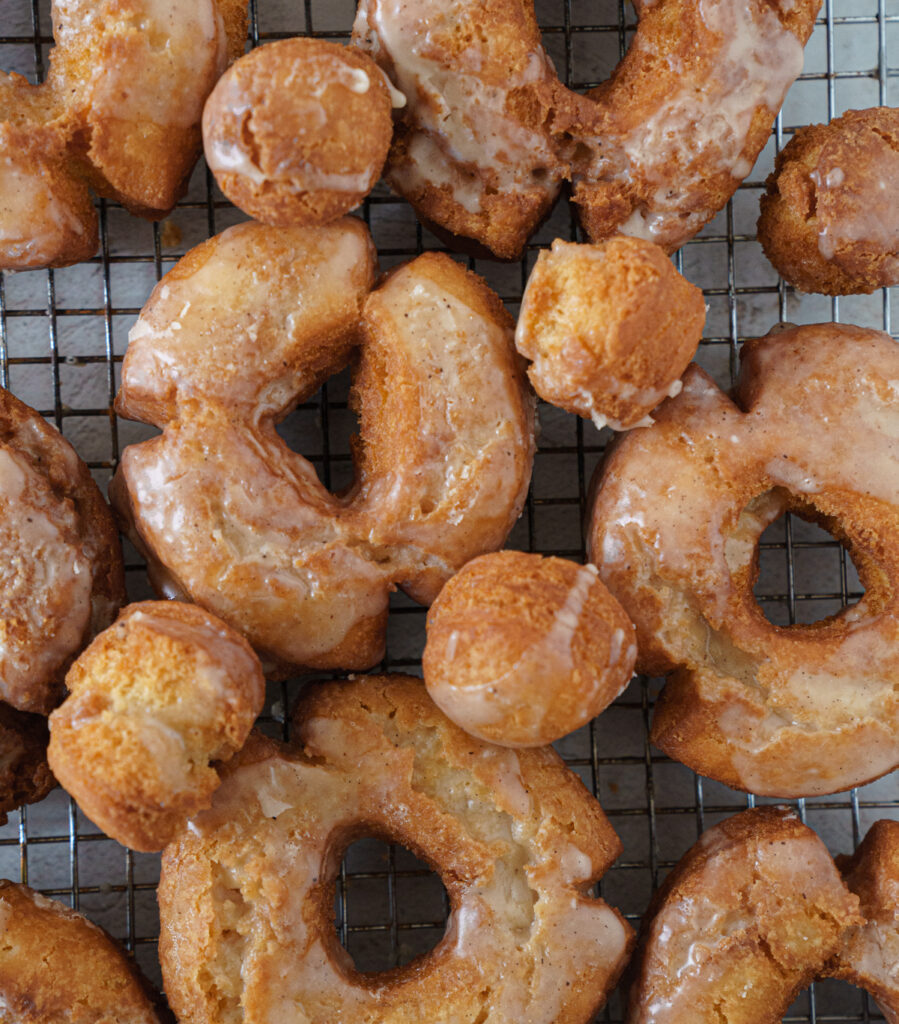
- Why did my donuts not crack? Most likely the oil was too hot, which set the outside too fast before the inside could push through. Keep the temperature between 325 and 350 degrees and make sure you scored the surface before frying.
- Can I use a pan instead of a deep pot? A wide, deep-sided pan works, but a heavy-bottomed pot maintains heat more consistently between batches, which gives you more even results.
- Do I need extra flour when rolling? A light dusting is enough. Too much flour worked into the dough will make the donuts tough, so go easy on the work surface.
- Can I bake these instead of frying? No. The texture that makes an old fashioned an old fashioned comes specifically from frying. Baking produces something technically edible but spiritually different.
How To Store Buttermilk Old Fashioned Donuts
- Store at room temperature in an airtight container for up to two days. The glaze will soften over time but they will still taste good.
- Avoid the refrigerator. It dries them out faster than leaving them on the counter.
- To freeze, let the fried donuts cool completely before glazing, then freeze in a single layer on a baking sheet before transferring to a freezer bag.
- They keep in the freezer for up to one month.
- To thaw, leave them at room temperature, then warm briefly and glaze fresh before serving.
Don't forget to save this recipe card and share it! I'd love to hear your feedback or answer any questions you have! Follow me on Facebook, Instagram, Pinterest, and TikTok. I post so many fun things on all platforms.
Recipe
Buttermilk Old Fashioned Donut
Ingredients
- ½ cup butter softened to the touch
- ½ cup granulated sugar
- ¼ cup brown sugar packed
- 2 large egg yolks cold
- 1 large whole egg
- 1 teaspoon pure vanilla extract
- 3 tablespoon sour cream
- 2 teaspoons baking powder
- 2 tablespoon milk powder
- 1 teaspoon salt
- 3 ½ cups all purpose flour
- ½ cup whole buttermilk* see note for homemade
For the glaze
- 3 ½ cups powdered sugar sifted if lumpy
- ¼ cup water plus more as needed
- 1 tablespoon vanilla extract
Instructions
- In a large mixing bowl (or the bowl of your stand mixer fitted with the paddle attachment), beat the softened butter, granulated sugar, and brown sugar together on medium speed until light, fluffy, and creamy-about 2-3 minutes. Scrape down the sides and bottom of the bowl as needed.½ cup butter softened to the touch, ½ cup granulated sugar, ¼ cup brown sugar packed
- Add in the egg yolks, whole egg, and vanilla extract. Beat until fully combined. The mixture may look slightly separated or curdled-totally fine. Add the sour cream and mix on low just until combined.2 large egg yolks, 1 large whole egg, 1 teaspoon pure vanilla extract, 3 tablespoon sour cream
- In a separate medium bowl, whisk together the all-purpose flour, baking powder, milk powder, and salt until well distributed. This step ensures the leavening is evenly incorporated and prevents any clumps in the dough.2 teaspoons baking powder, 2 tablespoon milk powder, 1 teaspoon salt, 3 ½ cups all purpose flour
- With the mixer on low speed, add the dry ingredients and the buttermilk. Mix just until a dough starts to come together-do not overmix. The dough will be soft, thick, and slightly tacky.½ cup whole buttermilk*
- Turn the dough out onto a lightly floured surface. Gently knead it once or twice to bring it together, then shape it into a flat disc about 1-1½ inches thick. Wrap in plastic wrap and refrigerate for at least 1 hour, or up to overnight.
- On a lightly floured surface, roll out the chilled dough to about ½ inch to ⅝ inch thickness. Use a floured donut cutter to cut out as many donuts as possible, then gently reroll the scraps and continue cutting. You want the donuts to be thick enough to hold their shape and get a tender, cakey middle.
- Once your donuts are cut, use a sharp paring knife to cut three small vertical slits evenly spaced around the outer edge of each donut. Then, using the tip of your knife, make a shallow incision around the inner ring (where the donut hole was cut), just scoring the surface. This creates those signature craggy ridges and deep cracks as they fry, like the kind you'd see at a real donut shop.
- Place the cut donuts onto a parchment-lined baking sheet, cover loosely with plastic wrap, and refrigerate for another 20-30 minutes. This second chill helps the donuts keep their shape during frying and promotes those signature crackly rings.
- Fill a heavy-bottomed pot or deep fryer with at least 2 inches of oil (vegetable or canola). Heat the oil to 325-350 F and maintain that temperature. Use a thermometer-this part is crucial. Too hot, and the donuts will get too dark and dry; too cool, and they'll absorb too much oil.
- Working in small batches (2-3 at a time), gently lower the chilled donuts into the hot oil. Fry for 90 to 2 minutes per side, or until deeply golden and cracked. They may flip on their own-if not, gently turn them with a slotted spoon or spider. Keep the oil temperature steady between batches.
- Use a slotted spoon to lift the donuts out of the oil and transfer them to a wire rack set over a baking sheet. Let them cool for about 5-10 minutes before glazing.
- In a medium bowl, whisk together the powdered sugar, water, and vanilla extract until smooth. If the glaze feels too thick, add more water a teaspoon at a time until it's pourable but still coats the donut.3 ½ cups powdered sugar, ¼ cup water, 1 tablespoon vanilla extract
- Instead of dipping, try pouring the glaze over each donut while they're still warm. This helps the glaze run into every crack and crevice and gives you that glossy, professional finish. Let the glaze set for about 10 minutes before serving.
Notes
- Add 1½ teaspoons white vinegar or lemon juice to a liquid measuring cup
- Fill with whole milk until you reach the ½ cup line
- Stir and let sit for 5-10 minutes until slightly curdled. the longer you let it sit, the better it is! Sometimes I let mine sit in the fridge overnight!
Rexann Nielsen says
These donuts are fun to make & everyone loved them❤️ Thank you for your good directions
YOU ARE AMAZING !
Dana Eynon says
Made these donuts and they came out perfectly! Easy to follow and loved by all.
Susan Brown says
10/10 recipe.
Chelci says
The whole family loved these! AND they were made by my 12 year old! Amazing recipe!!
Lesli says
Making these this weekend finally! Just looking at your photo they taste amazing!
Mona says
This is the most delicious donut recipe ever! I’ve made it multiple times now and people need to know how amazing it is. Thank you!
Nicci says
What if I don’t have milk powder?
Molly Murphy says
You don't have to add it in there!