
This Banana Biscoff Cake is a three-layer banana cake sitting on a crunchy Biscoff cookie crust, all wrapped up in a Biscoff buttercream that will make you question every other dessert you have ever made.
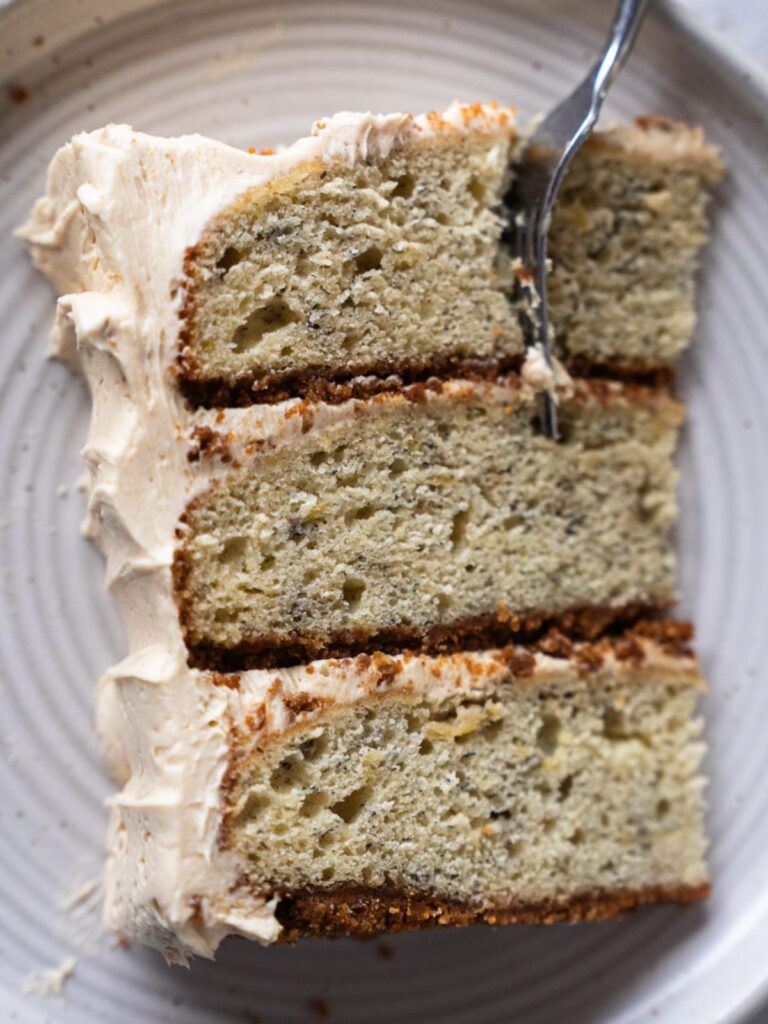
Some people plan their recipes carefully. They sketch out flavor profiles, test ingredients methodically, and document their process in an orderly fashion. I am not those people. This banana biscoff cake was born from two very simple obsessions: Biscoff cookie butter and a really good banana dessert. I did not overthink it. I just combined the two things I love most and, shockingly, it worked out extremely well. You are welcome.
If you are the type of person who needs more banana and Biscoff in your life (and honestly, who isn't), go ahead and bookmark my Banana Caramel Cake, my Banana Bread with Streusel, and my Biscoff Caramel Cake while you are at it. You can thank me later.
Why You'll Love This Recipe
- The cookie crunch crust. I have said it before and I will say it again: layer cakes need more texture. This Biscoff cookie crust is pressed right into the bottom of each cake layer before baking, and it delivers a satisfying crunch with every single bite. It is the kind of thing that makes people stop mid-conversation at the dessert table.
- Incredibly moist cake layers made with real ripe bananas and buttermilk. The crumb is tender, rich, and exactly what a banana cake should be. No dry cake here. We do not do that.
- A Biscoff buttercream that is made with actual biscoff cookie butter and tastes like someone figured out how to frost a cake with your favorite cookie. It is smooth, fluffy, and deeply, unfairly delicious.
- It looks impressively difficult but is not. Three layers, a crunchy crust, and beautiful frosting. People will ask if you went to pastry school. You can decide how to answer that.
- It uses ripe bananas, which means this recipe also doubles as a very productive use of the bananas sitting on your counter that you have been meaning to eat for the past five days.
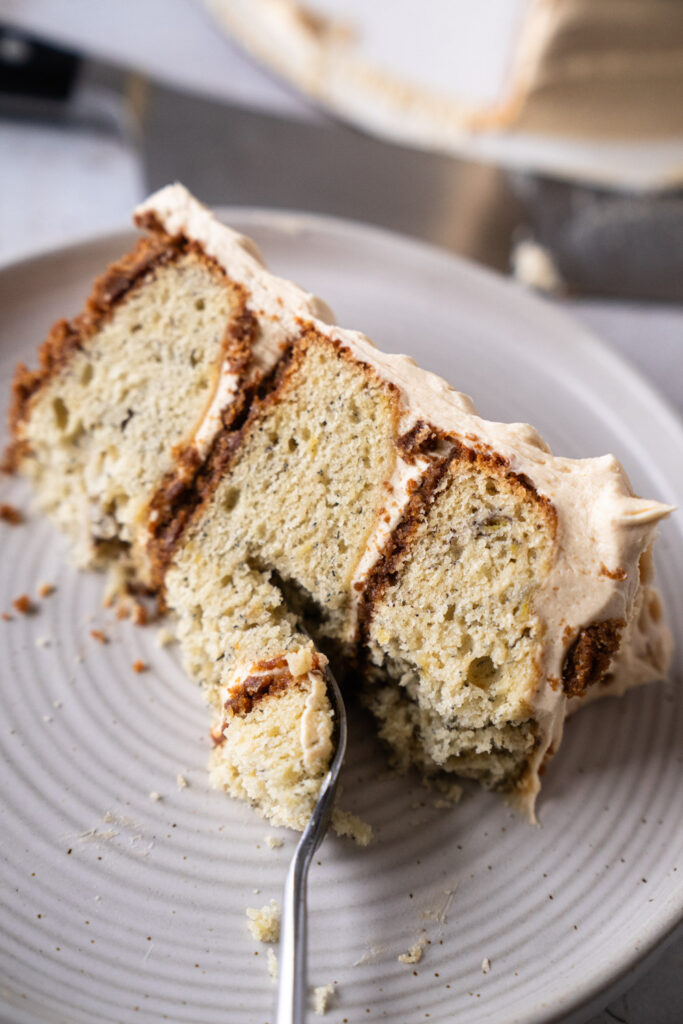
Ingredient Overview - Biscoff Banana Cake
Here is a look at the key ingredients that make this banana biscoff cake worth every single dish you will wash afterward. Full quantities are in the recipe card below.
- Biscoff cookies: pulsed into fine crumbs, these are the foundation of the crust and the reason this cake has a personality.
- Biscoff spread: the ingredient that ties everything together. Mixed into the buttercream, it gives the frosting a rich, spiced, caramelized flavor that is genuinely unfair.
- Unsalted butter: used in the crust, the cake, and the frosting. Room temperature for the cake and frosting, melted for the crust. Plan accordingly.
- Ripe bananas: the more overripe the better. Brown-spotted or fully brown peels mean sweeter, more flavorful bananas with the moisture this cake actually needs. The perfect yellow ones are for snacking.
- Buttermilk: adds moisture and a gentle tang that keeps the cake soft and tender. It is doing a lot of quiet, important work and deserves some credit.
- Large eggs: room temperature please. Cold eggs do not cooperate with creamed butter and will make your batter look curdled, which is not the vibe.
- All-purpose flour: the structural backbone of the batter. Nothing fancy required.
- Baking powder and baking soda: both are here and both are necessary. They work together to help the cake rise properly and keep the layers light rather than dense.
- Powdered sugar: the base of the Biscoff buttercream, added gradually so it stays in the bowl and not on your shirt.
- Heavy cream: added a tablespoon at a time to bring the frosting to the perfect spreadable consistency. Also useful if things get too thick.
How to Make the Banana Cake Layers
This banana cake recipe comes together in a straightforward. Here is how to do it: (for the full recipe, please refer to the recipe card at the bottom!)
- Prep your pans. Preheat oven to 375°F. Spray three 8-inch round cake pans with nonstick spray, line bottoms with parchment, then spray again.
- Make the Biscoff crust. In a bowl, stir together Biscoff cookie crumbs, melted butter, and sugar until the mixture resembles wet sand and holds when pressed. Divide evenly between the pans and press firmly into the bottoms.
- Mix dry ingredients. Reduce oven temperature to 325°F. In a medium bowl, whisk together flour, baking powder, baking soda, and salt. Set aside.
- Mash bananas. In a separate bowl, mash the ripe bananas with a fork until mostly smooth with a few small lumps remaining.
- Cream butter, oil, and sugar. In a stand mixer fitted with the paddle attachment, beat butter, vegetable oil, and granulated sugar on medium-high speed for about 5 minutes until light and fluffy. Scrape down the sides and bottom of the bowl as needed.
- Add eggs and vanilla. Reduce speed to medium and add the eggs one at a time, mixing about 30 seconds after each addition and scraping the bowl between additions. Add vanilla extract and mix on low.
- Alternate wet and dry. With the mixer on low, add ⅓ of the flour mixture and mix just until combined. Add ½ of the buttermilk and mix again. Continue alternating, ending with the flour. Mix only until no dry streaks remain.
- Fold in bananas. Add the mashed bananas and gently fold in with a rubber spatula.
- Divide and bake. Divide batter evenly between pans and smooth the tops with an offset spatula. Bake 30-33 minutes.
What Is Biscoff Cookie Butter?
If you have never baked with Biscoff cookie butter before, first of all, where have you been. Biscoff spread is a smooth, creamy spread made from crushed Biscoff cookies, which are those caramelized, lightly spiced shortcrust cookies you have probably had with your coffee at some point and thought were unremarkable. They are not unremarkable. When processed into a spread, they become something with the texture of peanut butter and the flavor of warm caramel mixed with cinnamon and brown sugar. You can find Biscoff spread in most grocery stores near the nut butters, and it is also labeled as Lotus Biscoff spread depending on where you shop. It is the key player in the Biscoff buttercream in this recipe and also what makes the crust taste the way it does. Once you start baking with biscoff cookie butter, other spreads start to feel like a step down.
How to Assemble Banana Biscoff Cake
- Level the layers if needed. Once completely cooled, use a serrated knife to trim any domed tops so the layers stack evenly and do not slide around.
- Place the first layer. Set the first cake layer on a cake board or serving plate with the Biscoff crust facing down. Add about three quarters of a cup of Biscoff frosting and spread evenly to the edges using an offset spatula.
- Stack and frost. Place the second layer on top, crust side down, and repeat with another three quarters of a cup of frosting. Add the final cake layer on top.
- Apply the crumb coat. Spread a thin layer of frosting over the entire outside of the cake. This step traps any loose crumbs so they do not end up on the surface of your final layer. Do not skip it.
- Chill. Place the cake in the freezer for 10 to 15 minutes until the crumb coat is firm. This takes very little time and saves you a lot of frustration later.
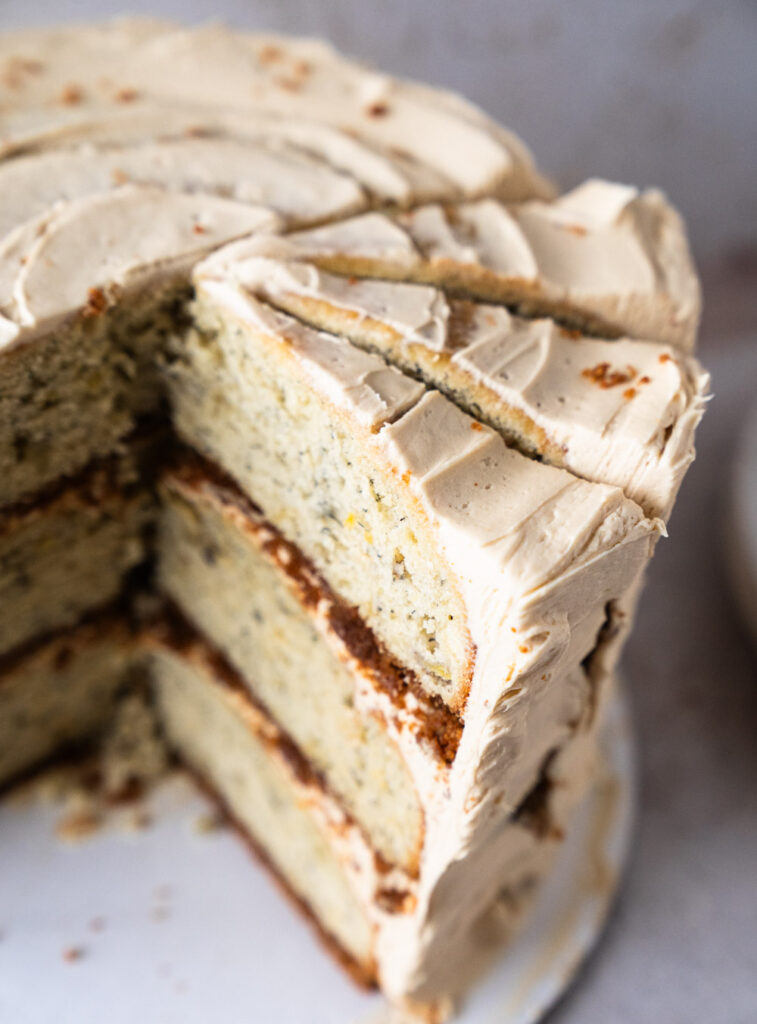
- Apply the final frosting. Once the crumb coat has set, apply the remaining frosting and smooth the sides and top with an offset spatula until you are satisfied with how it looks.
- Rest before slicing. Let the cake sit at room temperature for about 20 minutes before cutting. The frosting softens slightly and the slices come out clean. Good things come to those who wait, including clean cake slices.
Common Mistakes to Avoid
A few things that will quietly ruin your banana biscoff cake if you let them:
- Using underripe bananas. Yellow, firm bananas will not give you the moisture or sweetness this recipe needs. You want bananas with brown spots, or even fully brown peels. The ones that look like you have been neglecting them are actually the ideal ones for this recipe. Finally, a use for those.
- Not pressing the crust firmly enough. The Biscoff crust needs to be compacted tightly into the pan or it will crumble when you try to invert the layers. Use the flat bottom of a measuring cup or glass and press with actual intention.
- Using cold ingredients. Cold butter will not cream properly, cold eggs can cause the batter to curdle, and cold buttermilk does not incorporate the same way. Room temperature ingredients are not a suggestion. They are instructions.
- Overmixing the batter. Once the dry ingredients go in, mix only until the flour disappears. Overmixing develops gluten and turns your tender banana cake into something significantly less enjoyable.
- Frosting a warm cake. If the cake layers are even slightly warm, the Biscoff buttercream will slide right off. Cool them completely. Patience is a virtue and also a structural requirement here.
- Skipping the crumb coat. It feels like an unnecessary extra step until you skip it and end up with crumbs embedded in your final frosting layer. The crumb coat is there for a reason. Trust the process.
Frequently Asked Questions
Questions I get about this banana biscoff cake, answered honestly:
- Can I make this into cupcakes? Yes. Press a small amount of Biscoff crust mixture into the bottom of each lined cupcake tin, top with batter, and bake at 325°F for 18 to 22 minutes until a toothpick comes out clean. Frost with the Biscoff buttercream. They will be very good and also significantly easier to share than a whole cake.
- Can I use salted butter instead of unsalted? You can, but unsalted butter gives you control over how much salt ends up in the final product. If salted butter is what you have, reduce or skip the additional salt in both the cake and the frosting so it does not end up tasting like a mistake.
- What can I substitute for buttermilk? Add one tablespoon of white vinegar or lemon juice to one cup of regular milk, stir, and let it sit for 5 minutes. It mimics the acidity of buttermilk well enough to work here. It is not identical but it is close, and close is fine.
- How ripe do my bananas actually need to be? Very ripe. Brown-spotted or fully brown peels are what you are looking for. If your bananas are not there yet and you need to speed things up, place the unpeeled bananas on a baking sheet and roast them at 300°F for 15 to 20 minutes until the skins turn black. It sounds alarming but it works.
- Can I make the cake layers ahead of time? Absolutely. Bake the layers, cool them completely, wrap each one tightly in plastic wrap, and store at room temperature for up to one day or in the freezer for up to two months. Thaw overnight in the fridge before assembling. Planning ahead is underrated.
Storing and Freezing
This banana biscoff cake can sit at room temperature for up to one day if your kitchen is on the cooler side. For anything longer than that, cover it tightly with plastic wrap or store it in an airtight container in the fridge for up to 4 to 5 days. Since this cake is made with real bananas, refrigeration is the safer call. Before serving, let it sit out at room temperature for about 20 to 30 minutes so the frosting softens and the cake returns to the texture it was always supposed to have.
This cake freezes well, to freeze the whole assembled cake, place it in the freezer uncovered for 1 to 2 hours until the frosting is firm, then wrap it tightly in plastic wrap followed by aluminum foil. It will keep for up to two months. To freeze individual slices, wrap each one in plastic wrap and store in a freezer-safe bag or container. Thaw overnight in the fridge or at room temperature for a couple of hours. The Biscoff crust holds up remarkably well from frozen.
IF YOU WANT ALL THE FUN RECIPES HERE ARE SOME YOU SHOULD TRY!
- Biscoff Banana Bread
- The Great Pumpkin Biscoff Cake
- Ultimate Biscoff Cake With Cookie Butter
- Salted Caramel Biscoff Cheesecake Bars
- Banana Bread Cinnamon Rolls
If you loved this recipe, don't forget to leave a 5-star rating and a comment! I'd love to hear your feedback or answer any questions you have! Follow me on Instagram, Pinterest, and TikTok. I post so many fun things on all platforms.
Recipe
Banana Biscoff Cake
Ingredients
For the Crust
- 30 whole Biscoff cookies pulsed to a powder in a food processor
- ½ cup unsalted butter melted
- ⅓ cup granulated sugar
For the banana cake layers:
- 3 cups all-purpose flour
- 2 teaspoons baking powder
- 1 teaspoon baking soda
- 1 teaspoon salt
- 1 cup unsalted butter room temperature
- 1 Tablespoon vegetable oil
- 1½ cups granulated sugar
- 4 large eggs room temperature
- 1 cup buttermilk room temperature
- 1 teaspoon vanilla extract
- 4 medium-sized or 3 large ripened bananas mashed
For the Biscoff Frosting
- 2 cups unsalted butter room temperature
- 3 cups cookie butter spread
- 5 cups powder sugar
- 3-4 tablespoon heavy cream
- 1 teaspoon vanilla
- ¼ teaspoon salt
Instructions
For the Biscoff Crust
- Preheat your oven to 375°F. Spray three 8-inch round cake pans with non-stick cooking spray. Line the bottoms with parchment paper, then spray again to ensure the cakes release easily. Set aside.
- In a food processor, blend your biscoff cookies until a fine crumb.
- In a medium mixing bowl, combine the Biscoff cookie crumbs, melted butter, and granulated sugar. Using a rubber spatula, stir the mixture together until all of the crumbs are evenly coated in butter.30 whole Biscoff cookies pulsed to a powder in a food processor, ½ cup unsalted butter melted, ⅓ cup granulated sugar
- Continue mixing until the texture resembles wet sand. When you squeeze a small handful of the crumbs in your hand, the mixture should hold together and not fall apart.
- Divide the mixture evenly between the three prepared cake pans (about 4 ounces per pan if using a kitchen scale or 1 cup).
- Using the bottom of a measuring cup or flat glass, press the crumbs firmly into the bottom of each pan to create an even crust layer. Make sure the crust is packed tightly so it holds together once baked.
- Bake for 5-7 minutes, or until the crust is lightly golden and fragrant.
- Remove the pans from the oven and allow the crusts to cool while you prepare the banana cake batter.
For the Banana Cake:
- Reduce the oven temperature to 325°F.
- In a medium bowl, whisk together the all-purpose flour, baking powder, baking soda, and salt until evenly combined. Set aside.3 cups all-purpose flour, 2 teaspoons baking powder, 1 teaspoon baking soda, 1 teaspoon salt
- In another bowl, mash the ripe bananas using a fork until mostly smooth with only small lumps remaining. Set aside.4 medium-sized or 3 large ripened bananas mashed
- In the bowl of a stand mixer fitted with the paddle attachment, add the butter, vegetable oil, and granulated sugar. Mix on medium-high speed for about 5 minutes, until the mixture becomes light in color and fluffy in texture.1 cup unsalted butter room temperature, 1 Tablespoon vegetable oil, 1½ cups granulated sugar
- Using a rubber spatula, scrape down the bottom and sides of the bowl to ensure everything is evenly incorporated. Reduce the mixer speed to medium. Add the eggs one at a time, mixing for about 30 seconds after each addition. Scraping the sides and bottom of the bowl with a rubber spatula after each addition4 large eggs room temperature
- Add the vanilla extract and mix on low speed until incorporated. Scrape the bowl again to make sure everything is evenly combined. With the mixer on low speed, begin alternating the dry ingredients and buttermilk.1 teaspoon vanilla extract
- Add about ⅓ of the flour mixture, mixing just until it disappears into the batter. Next, add about ½ of the buttermilk, mixing again on low until combined. Continue alternating the remaining flour and buttermilk, finishing with the flour mixture. Mix only until no dry flour streaks remain.1 cup buttermilk room temperature
- Add the mashed bananas and gently fold them into the batter using a rubber spatula. Scrape along the bottom and sides of the bowl while folding to ensure everything is evenly combined. Do not overmix. The batter should look smooth, thick, and evenly blended.
- Divide the batter evenly between the three prepared cake pans (about 20 ounces of batter per pan if using a kitchen scale).
- Using a small offset spatula, gently spread the batter so it reaches all edges of the pan and sits evenly on top of the crust.
- Bake for 30-33 minutes, or until a toothpick inserted into the center comes out clean or with a few moist crumbs attached.
- Remove the cakes from the oven and allow them to cool in the pans for 10 minutes. Run a small offset spatula or butter knife around the edges of each cake to loosen them from the pan.
- Carefully invert the cakes onto a wire rack and allow them to cool completely before frosting.
- If the cakes have domed slightly during baking, use a serrated knife to level the tops once they are fully cooled.
For the Cookie Butter Filling
- In the bowl of a stand mixer fitted with the paddle attachment, add the butter and Biscoff cookie butter spread. Mix on medium speed for 2-3 minutes until the mixture becomes smooth and creamy.2 cups unsalted butter room temperature, 3 cups cookie butter spread
- Using a rubber spatula, scrape down the bottom and sides of the bowl to ensure everything is evenly mixed. Add the powdered sugar, heavy cream, vanilla extract, and salt. Mix on low speed at first to prevent the powdered sugar from flying out of the bowl.5 cups powder sugar, 3-4 tablespoon heavy cream, 1 teaspoon vanilla, ¼ teaspoon salt
- Once the sugar begins incorporating, increase the speed to medium-high and beat the frosting for about 2 minutes, until it becomes light, fluffy, and spreadable. Scrape down the bowl once more and mix briefly to ensure a smooth buttercream.
- If the frosting seems too thick, add an additional tablespoon of heavy cream.
Assembly
- Once the cake layers are completely cool, begin assembling the cake. If needed, use a serrated knife to level the tops of the cake layers so they stack evenly.
- Place the first cake layer on a cake board or serving plate, with the Biscoff crust facing down. Add about ¾ cup of Biscoff frosting to the top of the cake. Using an offset spatula, spread the frosting evenly to the edges of the cake layer. Try to keep the frosting level so the cake stacks evenly.
- Place the second cake layer on top, again with the Biscoff crust facing down.Repeat the frosting process with another ¾ cup of frosting.
- Place the final cake layer on top.
- Using an offset spatula, spread a thin crumb coat layer of frosting over the entire cake. This helps trap crumbs and creates a smooth final layer.
- Place the cake in the freezer for 10-15 minutes so the crumb coat can set.
- Remove the cake and apply the final layer of frosting, smoothing the sides and top with an offset spatula.
- Allow the cake to sit at room temperature for about 20 minutes before slicing so the frosting softens slightly and the cake cuts cleanly.
Leave a Reply